I first met Shane at a central Texas off-road park. I had a Rubicon at the time and was still learning the trails. Shane took the lead that day, showing us how to navigate obstacles that looked terrifying. But as I watched him work through them, I realized he knew his stuff. He was competent and safe. I started listening.
Over the next two years, I rode with Shane dozens of times. He earned my trust through repetition and results.
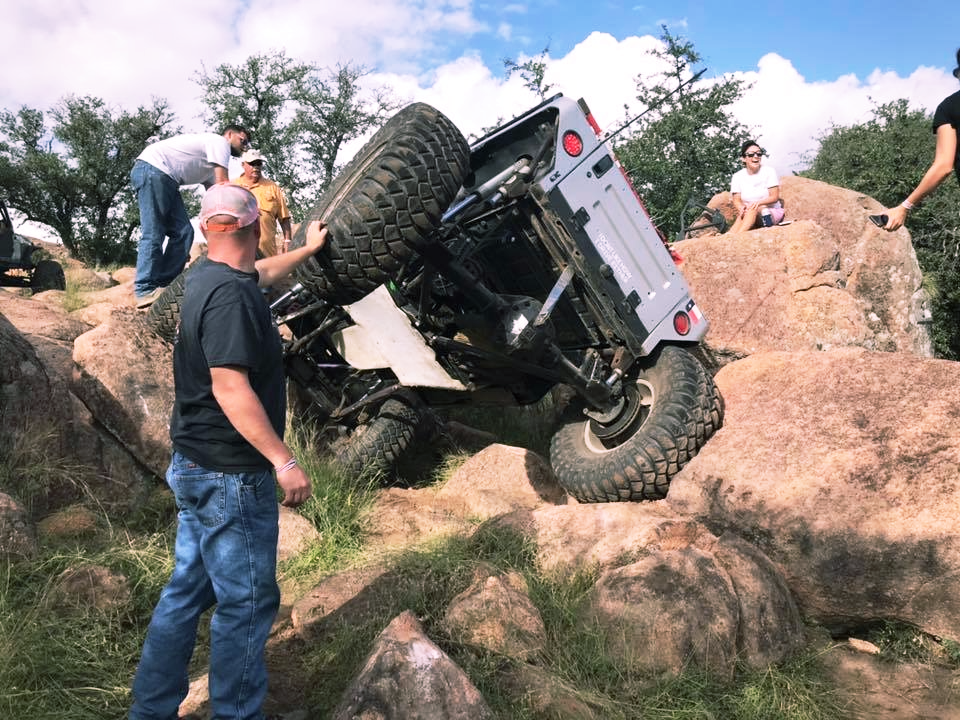
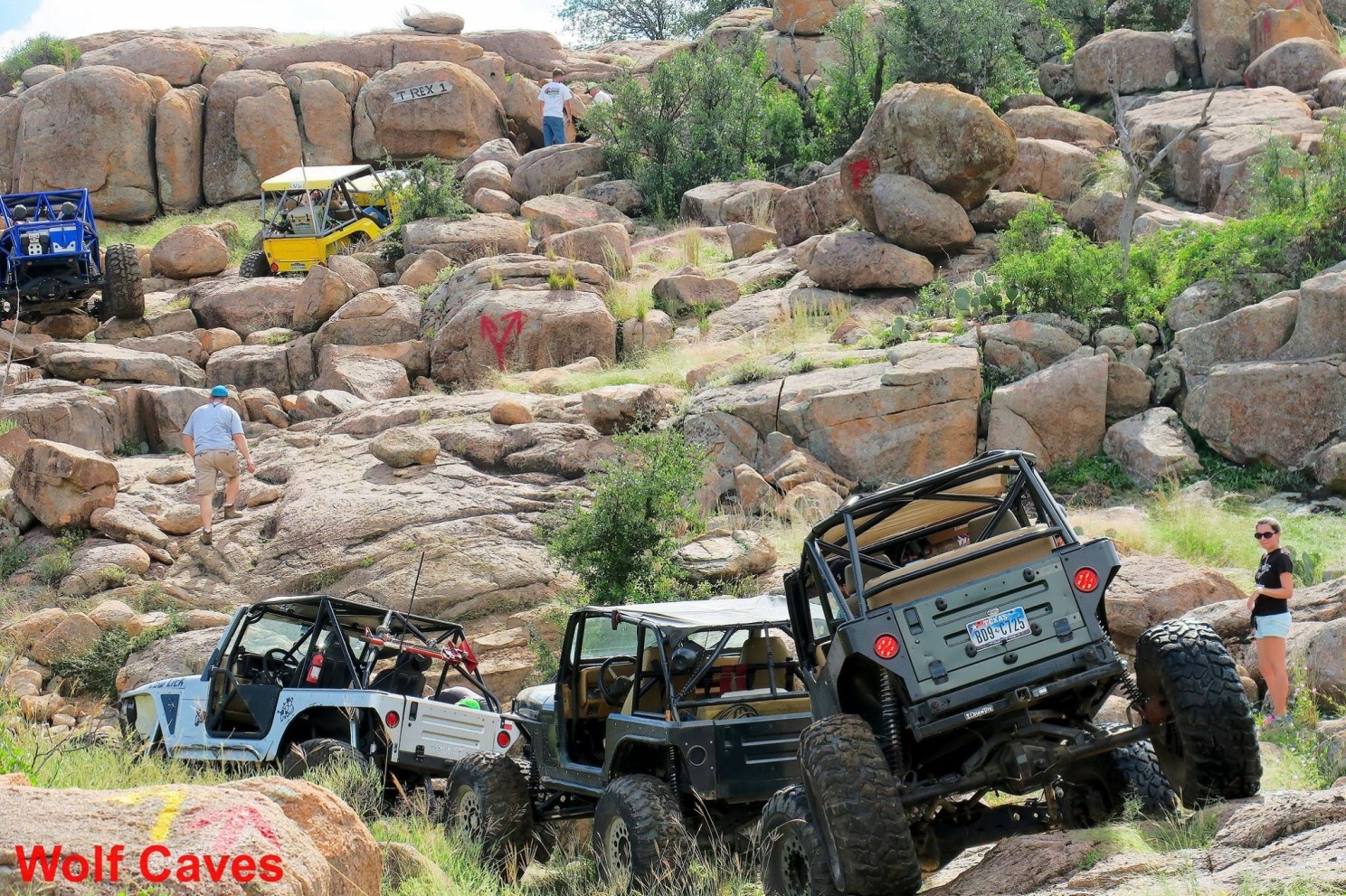
On this particular day at Wolf Caves, I took a line I thought I had, but I misjudged it by inches. The wheels slipped and over I went. It wasn't as dramatic as it looks, but it felt pretty uncomfortable when all you see is sky.
Shane's voice cut through immediately. "Hands in. You're going over now. Keep your head down."
My buggy was built for this. Full roll cage, 5-point harness, fire suppression system, fuel cell. It was purpose-built for rollovers. Still, when you're on your side, you're vulnerable.
Once I was stable, Shane walked me through it. "How comfortable are you going all the way over if it happens?" I told him I was fine with the risk. The cage would hold.
Then he said something that stuck with me:
"Andrew, I wouldn't put you in a position I wouldn't do myself. You got this."
He coached me on where to turn the front wheels, how to engage each axle, how to lock each wheel independently to try to right the buggy without outside help. That's part of the challenge. You use the tools you have. Winches, jacks, onboard welder if you need it. You problem-solve in real time.
After about an hour, we realized I was stuck. The team had to hook two winches to the buggy and pull me over while also extracting my passenger-side front wheel from a groove in the rock. Everyone listened to Shane. He coached us through it as a team.
Once I was back in position, I attacked the rock face again and made it over. Then I hopped out and spotted for the rest of the group behind me because now I knew the line, what to watch for, what it felt like in the buggy. I became the coach for the next guy.
The lesson clicked. I wouldn't put you in a position I wouldn't do myself. It stuck with me. I apply it in business every day.
Business Applications
When we rolled out a new ERP system at HPP, I didn't sit in my office while the team struggled through implementation. I was in the system with them daily. We went live in Q4 and by Q3 it was clear we'd picked the wrong initial configuration. Order entry was breaking, inventory wasn't syncing, the production floor couldn't pull accurate BOMs. The team was panicking.
I called an all-hands meeting in the final week of Q3. I told them we were stopping, reassessing, and pivoting to a different approach. But I wasn't asking them to figure it out alone. For the next six weeks, I was in the weeds with them.
I sat with the production scheduler rebuilding workflows. I was on calls with the vendor at midnight working through data migration failures. I tested every workaround before we pushed it to the floor.
When we went live the second time, it held. Not because the software was perfect, but because the team trusted that I wouldn't ask them to navigate something I hadn't navigated myself first.
The Results of Shared Risk
This approach isn't soft. It delivers hard results. Over 13 years at HPP, we achieved the following metric improvements:
- Retention: Voluntary attrition dropped 50%.
- Tenure: Average tenure climbed past 12 years.
- Culture: In an industry where people typically move every 2-3 years, we built a team that stayed.
They stayed because they knew I wouldn't ask them to work a holiday I wasn't working. I wouldn't ask them to hit a deadline I wasn't hitting. I wouldn't put them in a position I hadn't been in myself.
That's the standard. That's how you build trust. You can't turn around a business without a team that trusts you to lead them through the hard stuff.
That's the standard I've held for 13 years. It's the standard I'll hold tomorrow.